
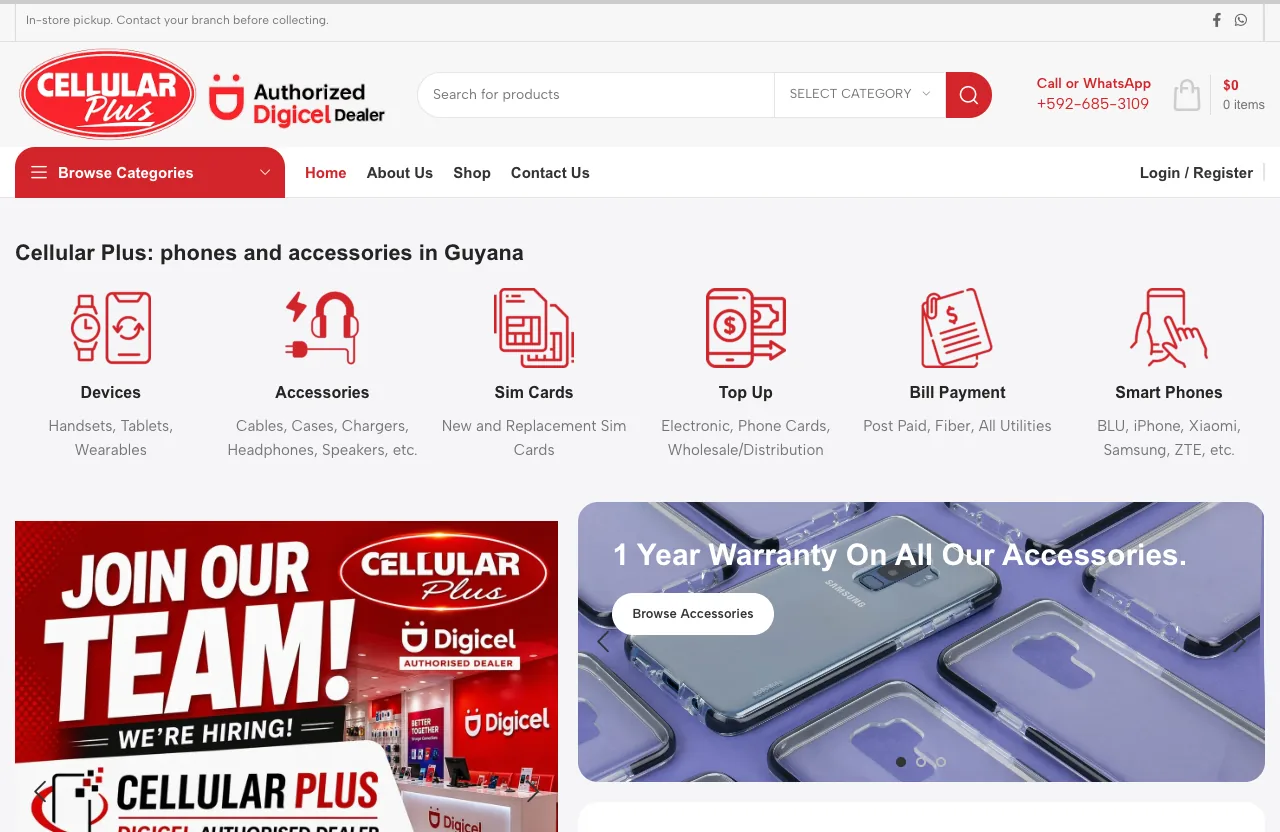
Commerce & Inventory
GYD $450,000starting point
Managed operations: GYD $45,000 per month
- Product catalogue and discovery
- Checkout or enquiry path
- Order, inventory and delivery handoff
Payment is confirmed first
MMG, card, bank transfer or cash on delivery: the gateway is confirmed with your merchant account before implementation.
From product to order
Find the product
Categories, availability and search, built around how customers compare.
Place the order
Checkout, enquiry or assisted order.
Move the work
Notifications, fulfilment, delivery, returns and who owns each.
Keep records useful
Store and inventory kept in step.
Which one fits?
Online store
A public path to browse and buy.
Business website
Services and contact paths, no catalogue. Multi-page websites →
Inventory software
Stock, locations and reporting need a dependable record. Inventory →
Web application
Staff need logins, approvals and shared records. Web apps →
Full pricing is in the pricing guide.
The hard part is after “add to cart”
Catalogue
How many products, variants and prices need upkeep?
Payment
Which provider, fees, refunds and confirmations can you support?
Fulfilment
Who picks, packs, delivers and handles returns?
Inventory
Where is stock tracked today, and what happens when it runs low?
Ownership
Who updates products, prices, access and backups after launch?
Growth
What to measure first: orders, enquiries or repeat purchases?
How it works
- 01
Map the journey
How orders work today, exceptions included.
- 02
Choose the first useful layer
Catalogue, assisted order, checkout or inventory connection.
- 03
Build and hand over
Orders, access, notifications and handoff verified before launch.
Questions
What does e-commerce website development in Guyana include?
A product catalogue, product pages, search or categories, a checkout or enquiry path, order notifications, delivery rules and a handoff to inventory or fulfilment.
How does payment integration work for an e-commerce website in Guyana?
The gateway is confirmed after reviewing the merchant account, provider, settlement process and customer journey. No gateway, MMG included, is promised before that review.
How much does an e-commerce website cost in Guyana?
From GYD $450,000, with GYD $45,000 per month for managed operations. Product volume, checkout, payment, inventory and delivery move the final scope.
When do we need inventory software or a web application?
Consider inventory software when stock needs a dependable source of truth, and a web application when staff need logins, approvals or shared records.